
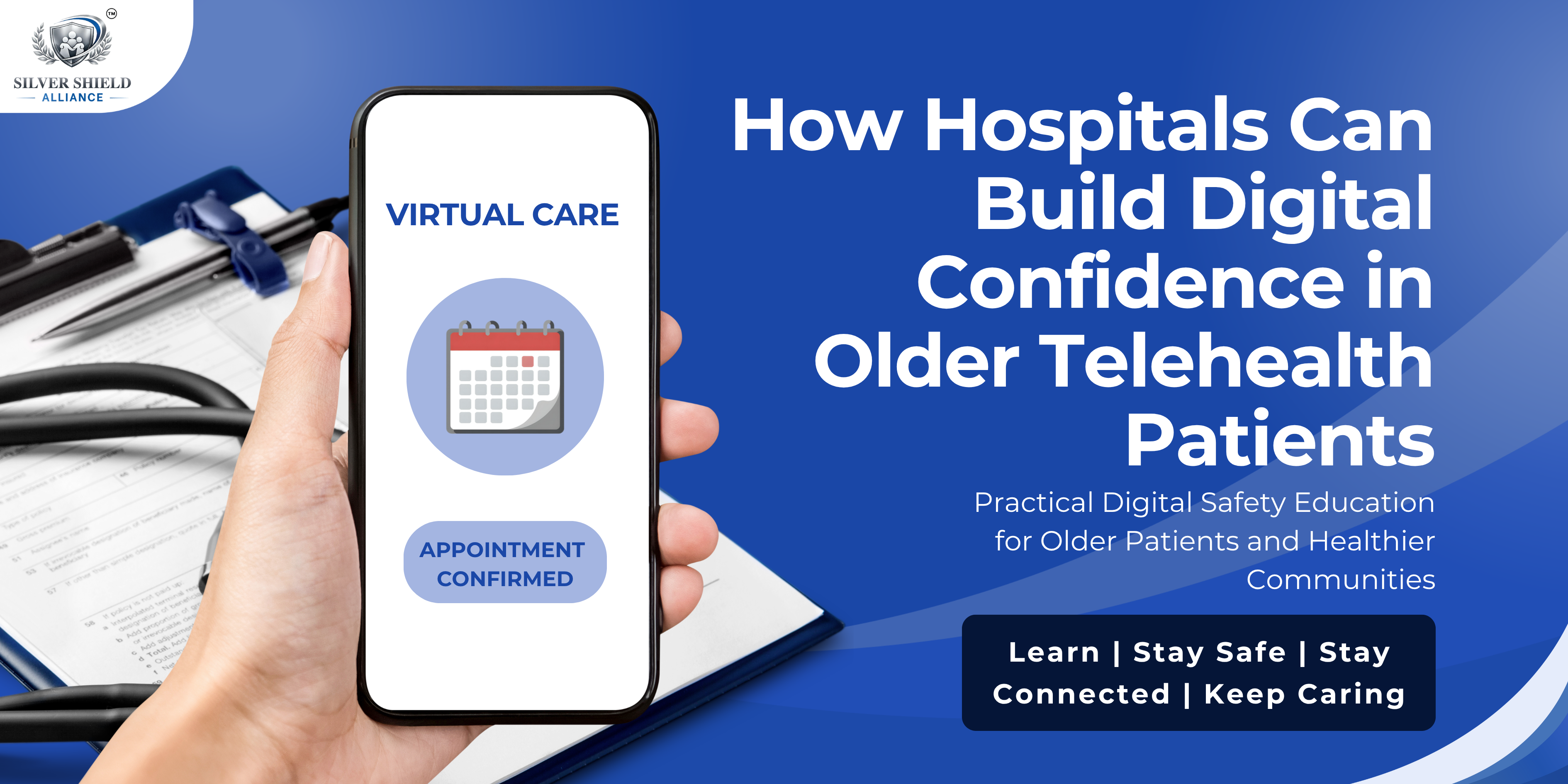
Your hospital may have made telehealth easier to access. But have you made it easier to trust?
Imagine a patient receiving a text about an upcoming video appointment.
It contains a link. The patient hesitates.
Is it really from the hospital? Is it safe to click? What happens if something goes wrong?
Now imagine the same patient receiving a message that explains exactly where appointment links come from, how to verify them, and whom to call for help.
The technology hasn't changed. The experience has.
That is the opportunity for healthcare organizations: teach digital safety in a way that builds confidence rather than creates another reason to avoid care.
Why digital literacy matters in healthcare
Digital healthcare is no longer limited to video appointments. Patients use online portals to view test results, request prescriptions, message care teams, and manage appointments.
Yet access to these tools does not automatically mean patients feel comfortable using them.
A study published in the American Journal of Public Health (AJPH) in July 2026 examined 2,723 device-owning U.S. adults aged 65 and older using 2024 survey data. It found that 31.4% had used telehealth. Video use was associated with higher income, independent app-use ability, and previous use of health technology.
The lesson for health systems is not that older adults cannot use technology. It is that digital literacy in healthcare for older adults deserves the same attention as access to digital tools.
A patient who knows how to verify a message, enter a portal, and ask for help has more ways to participate in their care.
The three moments that matter most
Instead of giving patients a long cybersecurity checklist, healthcare organizations can build patient cybersecurity education around three familiar moments.
01 · BEFORE THE VISIT
Recognize the real invitation
Show patients where genuine appointment messages come from and how to verify an unexpected link using a trusted hospital contact.
02 · DURING THE VISIT
Feel comfortable connecting
Practice joining a video call, using audio controls, and choosing a private space. Explain how to reconnect if the call drops.
03 · AFTER THE VISIT
Know where information belongs
Demonstrate how to access results and messages through the official portal, recognize unexpected payment requests, and contact the care team.
This approach makes older patient portal training practical. Patients learn a useful action at the moment they need it.
It also aligns with guidance from the U.S. Department of Health and Human Services (HHS), which recommends explaining how patients will be contacted and providing a trusted number for verifying messages.
Teach safety without creating fear
Consider two ways of introducing healthcare scam prevention.
Fear-focused messaging: “Scammers are targeting patients. Never trust appointment links.”
Confidence-focused messaging: “Your appointment details are available in your patient portal. If a message looks unfamiliar, call our office using the number on our website.”
Both address risk. Only the second gives patients a clear next step without suggesting that digital healthcare itself should be avoided.
Effective education should explain real risks accurately, offer practical safeguards, and make help easy to find.
That means replacing technical jargon with everyday instructions. Instead of simply telling patients to use multifactor authentication, show them how an additional sign-in step works and what to do if they cannot access it.
The goal is not to remove every concern. It is to help patients make informed decisions with support.
Make digital safety education part of patient care
A single workshop can introduce useful skills. But telehealth digital literacy for seniors becomes more practical when it is supported throughout the patient journey.
Hospitals and clinics can start with four actions:
ü Ask, don't assume. Include a simple technology-comfort question during intake.
ü Demonstrate, don't just explain. Offer a short practice session before the first virtual appointment.
ü Include caregivers with permission. Show support persons how to help while respecting patient privacy and independence.
ü Keep alternatives available. Offer accessible instructions, technical assistance, and appropriate phone or in-person options.
These recommendations are consistent with federal telehealth guidance on older-patient onboarding, caregiver support, accessibility, and flexible appointment options.
For healthcare leaders, the next step is to measure whether education actually helps.
Track successful portal sign-ins, completed virtual visits, requests for technical assistance, and patient-reported confidence. Review results across different patient groups to identify where additional support is needed.
These are suggested program measures, not guaranteed outcomes.
The opportunity for healthcare organizations
Digital safety should not feel like an extra burden patients must carry before receiving care.
It can become part of how a healthcare organization welcomes, prepares, and supports them.
Silver Shield Alliance helps organizations approach this challenge through practical digital safety education, technology learning, and scam-awareness programs designed to build confidence.
For hospitals, health systems, and clinics, the opportunity is to explore patient and caregiver education that complements existing telehealth onboarding and patient-support processes.
Because a successful digital health experience is not simply one where the technology works.
It is one where the patient knows what to do next.
Make digital confidence part of the care experience.
Help patients and caregivers navigate digital healthcare with practical skills, clear guidance, and greater confidence.
Explore Silver Shield Alliance for digital safety education and potential organizational learning opportunities.