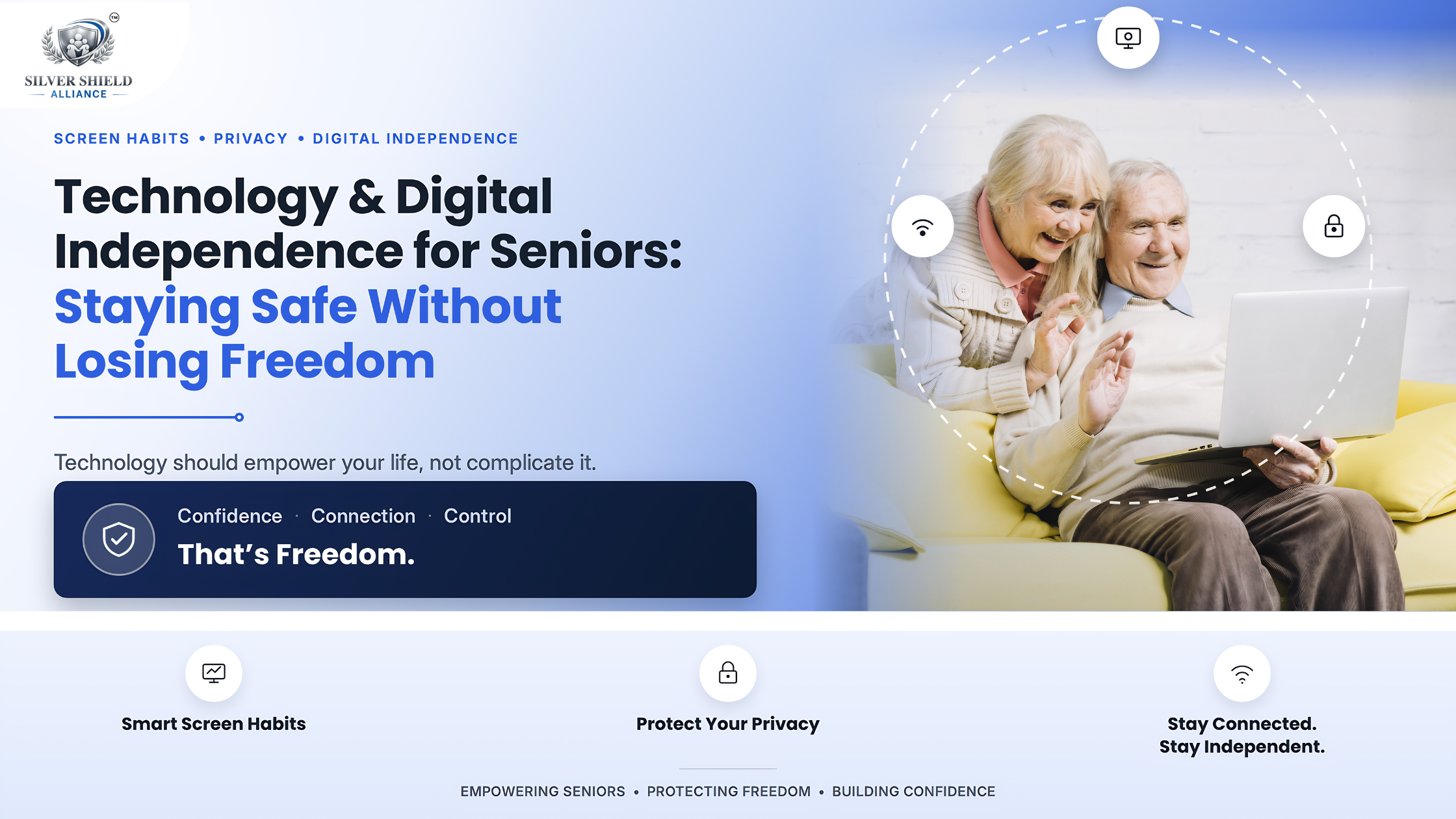
Technology can make life easier for older adults in many small but important ways.
A video call with family. Paying a bill without visiting the bank. Booking a doctor’s appointment. Listening to music. Looking up a recipe. Even ordering groceries on a difficult day.
All of this adds up to something bigger: independence.
The question is not whether seniors should use more or less technology. The real question is how they can use it without feeling watched, controlled, or afraid of making a mistake.
Digital Independence Is About Choice
For many older adults, learning to use technology means being able to do everyday things without always asking someone else for help.
That matters.
AARP’s 2026 research shows that smartphone use among adults over 50 is now widespread. Technology for older adults is no longer something older adults are simply “catching up” with. It is already part of daily life.
So support should not begin with the assumption that seniors cannot manage technology.
It should begin with a simpler idea: give people the knowledge to make their own decisions.
Safety Should Not Feel Like Supervision
Families often become more protective after hearing about scams targeting seniors. That concern is understandable.
The FBI reported that people aged 60 and above lost billions of dollars to internet-related crime in 2025.
But taking over a parent’s accounts, checking every message, or telling them not to use certain apps can create a different problem. It can slowly take away confidence.
A better approach is to agree on a few simple rules.
For example:
- Never send money because someone says it is urgent.
- Never share a one-time password over the phone.
- If a message feels unusual, call the person or company directly.
- Ask someone you trust before acting if you are unsure.
These habits give older adults a safety net without removing control.
Healthy Technology Use Matters Too
Online safety is not only about scams.
It is also about how technology fits into everyday life.
Phones, tablets, and televisions can easily become background habits. Hours pass without us noticing. That affects people of every age.
Older adults can benefit from healthy screen habits for seniors such as keeping phones away during meals, taking regular breaks, and deciding when to check social media or email.
Technology should support life outside the screen, not compete with it.
Keep Online Security Simple
Good digital safety for senior does not need to feel complicated.
Strong passwords, multi-factor authentication, software updates, and a little caution around unexpected messages can go a long way.
One of the most useful online security for seniors habits are simply learning not to respond immediately.
Scammers often depend on urgency. They want people to act before they have time to think.
So one small pause can be powerful.
Stop. Check who is contacting you. Then decide what to do.
Digital Confidence Matters More Than Perfection
No one uses technology perfectly.
Younger people click the wrong links too. They forget passwords. They get confused by settings. They fall for online scams
Also Read: 4 Scams Hitting Seniors Hardest Right Now: OTP, Banking, QR Code & Romance Fraud
Older adults should not be made to feel that one mistake proves they cannot manage technology on their own.
The goal should be steady digital confidence for older adults.
Every new skill helps preserve choice. Every question asked builds awareness. Every safe experience makes the next one easier.
That is why digital education for seniors should focus on more than devices. Good technology education for seniors should help people feel comfortable making decisions for themselves.
At Silver Shield Alliance, that is the bigger idea behind digital independence for seniors: help older adults stay connected, informed, and safe without taking away the freedom technology is supposed to give them.
Check out our latest programs here.